We hope that reader will gain an increased appreciation of the need for more conservation measure in order to protect the beautiful creatures that inhabit the earth. Our philosophy is that the more we learn about animals, the more we respect them and take better care of them. That is why we update this blog with new animals, We encourage you to syndicate our content by adding "animal of the day" to your own blog! (read more)
About us
Our mission is to get people excited about animals and their welfare by writing articles on these animals. We encourage people to comment on posts and share with others. Don't forget to subscribe to our feed.
Wednesday 29 December 2010
Patagonian Mara - A Little Bit of Everything
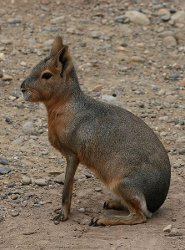
The Patagonian Mara (Dolichotis patagonum) lives in south and central Argentina mainly in areas of scrub desert or coarse grassland. It is a rodent resembling a short eared hare also called the Patagonian hare or Patagonian cavy but is actually a close relative of the guinea pig. It is one of the few rodents that mate for life, and its social structure is based on this. Pairs will travel everywhere together with the female in the lead and the male watching out for danger.
They usually keep to themselves except during breeding time. At that time they will share a burrow with other families with litters. The burrows are dug by the females. The pups are born well developed with open eyes. The female will identify her young by smell and lead them a little distance from the burrow to suckle. The male watches over the family at this time for predators. This unique social organization is thought to give more protection to the young. They live up to 10 to 15 years.
The third largest rodent in the world, the Patagonian Mara is 69 - 75 cm (about 2 feet) long. It can run very fast for its size, up to 45 kilometers (28 miles) per hour for distances over 1 kilometer, because it has powerful hind legs. The front legs are adapted for digging their burrows with four sharp claws. When fully grown they stand about 2 feet (.61 meters) at the shoulder, are 2.5 feet (.76 of a meter) long and weigh 35 pounds (15.88 kilograms).
The Patagonian Mara is gradually heading for the endangered species list. Its habitat is being cleared for agriculture and it is in competition for the green vegetation it eats with sheep and the European hare that have been introduced to the region. It is hunted by birds of prey, snakes and some mammals. Some localized populations have already become extinct. It is living in at least 12 protected areas at the present time. It is classified NT (near threatened) on the IUCN Red List.
This mammal seems to be a strange combination of several animals. They are fast runners like rabbits, and they can hop 6 feet into the air when startled. They walk like deer, and have some of the same coloring of deer or antelope with white on their underside and tail. They fold their front paws like a cat when resting in the sun. Their face resembles a kangaroo.
Picture of the Patagonian mara by Luis Argerich, licensed under the Creative Commons Attribution 2.0 Generic license.
You can help spreading the word about this animal by liking it on facebook
Thursday 23 December 2010
Brush-tailed Phascogale - A Bottle Brush for a Tail
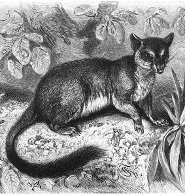
The Brush-tailed Phascogale (Phascogale tapoatafa) is a mammal about the size of a large rat found only in certain areas of Australia: New South Wales, Queensland and the Northern Territory. Also known as the Common Wambenger (!) or the Tuan, the Brush-tailed Phascogale is best known for the tuft of silky black hairs at the end of its long tail.
Description
The body, legs, and head of the Brush-tailed Phascogale are covered by a deep grizzled-grey fur, with a pale creamy undercoat. The rat-like head is crowned with large bare pointed ears. The tail, usually as long as the body, ends in a tuft of black hair much like a kitchen bottle brush. The average male is 15.8" (401 mm) long, and weighs 7 ounces (199 grams); the average female is 13.9" (352 mm) long and weighs 4.7 ounces (145 grams).
Habitat
The Brush-tailed Phascogale prefers areas with an annual rainfall over 20" (500 mm), in such regions as open forests, swamps, and rain forests. This marsupial is a very agile climber of trees, and often hangs head down from branches. The Brush-tailed Phascogale nests in tree hollows lined with shredded bark and leaves, often moving to many different hollows over their short lifetimes.
Position in Food Chain
An nocturnal hunter, the Brush-tailed Phascogale eats insects, spiders, beetles, cockroaches, and centipedes, and occasionally a small lizard or bird. They are the prey of the red fox and all types of cats.
Reproduction
Males, after being weaned, travel long distances to establish their own territories; females usually stay where they are born. When the time comes to mate, around June or July, the male travels long distances to find a female. A male dies almost immediately after mating season is over, around the age of one year.
Females, however, live longer, up to three years, but produce only one litter in their lifetime. Nesting in the hollow of a tree, an expectant female will, within thirty days, bear a litter of seven or eight young, who will spend their first seven weeks in their mother's marsupial pouch. Once the young leave the pouch, they will stay in the nest for five more months, until they are weaned.
Species Vulnerability
Originally, the Brush-tailed Phascogale was well-established throughout Australia. But, because of the destruction of their natural habitat, and continual predation, these marsupials have disappeared from most of Australia. The species is officially listed as having a "Near Threatened" status.
You can help spreading the word about this animal by liking it on facebook
Monday 20 December 2010
Giant Noctule - Preying on nocturnal birds
The Giant Noctule (Nyctalus lasiopterus) is a rare, flying mammal also known as the Greater Noctule Bat. They are found scattered around the Iberian Peninsula in southwest Europe, the Balkans in southeastern Europe, and the Ural region in western Russia. They have also been spotted in Morocco and Libya in northern Africa, as well as in Turkey, northern Iran, and Kazakhstan.
These bats weigh approximately 1.7 ounces (50 grams), and possess a wingspan of up to 23 inches (60 cm). Despite their small stature, they are surprisingly predatory, and small passerine birds who migrate at night are in danger. Within the past decade, it has been found that Giant Noctules chase, catch, and eat fowl prey while in flight.
They use echolocation to navigate, forage, and hunt in the dark. They echolocate within specific frequency ranges that are above the hearing range of birds, which gives the bats the upper hand during the hunt. They fly higher up in the air, upwards of .3 miles (500 meters) to find prey, and researchers believe that spring and autumn, peak months for bird migration, are prime hunting seasons for these predatory bats.
During peak migration periods, the diet of Giant Noctules consists largely of passerine, or small perching birds. These birds are caught and eaten on the wing, in mid-air during flight, rather than from nests or perches. This species is the only known bat species that feeds like this, see also this article. Insects are also an important source of food. They have a few natural predators in the wild including owls, which can capture bats during flight, just as Giant Noctules capture passerine birds.
They are native to certain countries in Europe, North Africa, and West Asia including Spain, France, Bulgaria, Romania, and the Ukraine. Their natural habitat consists of mixed and deciduous forests, as well as wooded river valleys. The Giant Noctules are highly dependent on mature woodlands containing old trees. They use hollow trees to roost in summertime, and rock crevices during the winter months, which are a time of hibernation. Old buildings are also common roosting sites.
Giant Noctules are considered to be a near threatened animal. Their population appears to be decreasing due largely to deforestation. In particular, the loss of old trees, which are crucial to supporting bat colonies, and the disturbance of other roosting sites, such as old buildings, threaten these small, remarkable creatures' survival.
Friday 17 December 2010
Gummy Shark- The Polka Dot Shark
The Gummy shark (Mustelus antarcticus) is found in the south of Australia. It is a slender shark, grey and with white spots along its body. They can also be bronze or greenish with a white belly, and the characteristic spots. This shark measures approximately 157 cm long, for males, and 175 cm for females; in this species the female seems to be larger. This species is not endangered and is cataloged as of "least concern" in the endangered species chart. In the shark family, it belongs to the Trikidae. This type of shark reproduces by oviviparity - when species embryos are in eggs, but they are kept inside the mother until they are ready to hatch. They give birth in the months of October -December. Mothers can give birth to as many as 40 babies, known as "pups;" however, they can also carry one. The average of pups is about 14. Mother sharks are pregnant for twelve months. The Gummy shark eats mostly crustaceans, small fish, squid, octopus, and marine worms.
One characteristic of the Gummy shark is that the second dorsal fin is as big or almost as big as the first fin. The fins are also rounded at the top. It also has whiskers near each nostril. These two characteristics differentiate it from school sharks since they tend to look alike, and sometimes, fishermen might get the species mixed up due to their close resemblance - this is one reason why the restriction for fishing is two fish for both species combined, whether a school fish or a gummy shark. Another way is by looking at their teeth; the gummy shark has flat teeth while the other species has small sharp teeth.
This shark has become popular as cuisine; its meat is known as flake. Australian cuisine benefits from the boneless filets, which are also great served as fish and chips - a popular and delicious plate. The meat is sweet and delicious and it can be done barbecued, baked, poached, or braised. This fish has not been endangered or over-fished due to the restrictions that have been established - only two are allowed and with a minimum size of 45 cm. However, this limit of two applies to Gummy sharks and /or school sharks, whether they are fished whole or as partial carcasses - since gummy sharks and school sharks can be found together in the same waters. This has kept the population from being endangered.
The Gummy shark can be found deep in the sea as far as 400 meters and their life span can be as long as 16 years. It seems that the biggest predator of this shark is human. Before the fishing laws and restrictions in effect, this shark was being over fished due to its meat being so marketable and tasty.
You can help spreading the word about this animal by liking it on facebook
Thursday 16 December 2010
Afghan Pika - Living High Off The Land
The Afghan pika (Ochotona rufescens), a terrestrial animal, is known for its adaptability to high altitudes. Native to the mountains of the Middle East, this mammal can be found specifically in Pakistan, Iran and its namesake, Afghanistan. The mammal is also indigenous to Armenia and Turkmenistan. Its habitat is rocky desert but is also found in temperate forests and burrowed in dry fields without stones.
These lagomorphs are small and oval-shaped, with males and females similar in size and weight. Its body is generally grey and brown, with tinges of cream coloring during summer months and heavy brown fur in winter. Eyes are widely set to offer a broad field of vision. The average weight is less than 500 grams (17.6 ounces) while average length ranges from 120 to 300 millimeters (4.7 to 11.8 inches.) Ears are round and large for its body, growing as long as 1.4 inches (36 millimeters). In contrast, both its head and legs are short and its tail barely visible. Because of poor heat dissipation and high body temperatures, the pika easily adapts to cold environments.
Unlike rodents, which have one pair of upper incisors, the Afghan pika has an additional set of upper teeth, but this extra pair is not sharp. Its diet consists of plants native to a dry habitat, including thistles. Pikas will also consume fresh feces to re-digest nutrients. The species has been known to damage orchards and agricultural crops in search of vegetation. Plants are stacked and dried in piles for future use. Although they tend to steal bedding and food from each other, pikas work in small groups to watch for predators, including birds of prey and other mammals. Warnings are emitted through sharp whistles.
Breeding season runs from mid-March to late September with a short gestation period. Newborn pikas are born blind and helpless and either hairless or slightly furred. Weaned after 22 days, pikas become adults within seven weeks of birth. Females can therefore become pregnant fairly young. The average litter ranges from five to seven, with as many as five litters per year. Rock dwellers live longer than their burrowing counterparts, up to seven years versus just two. With a stable population, the Afghan pika may have a population up to 70 per 10,000 square miles.
You can help spreading the word about this animal by liking it on facebook


 The Patagonian Mara (Dolichotis patagonum) lives in south and central Argentina mainly in areas of scrub desert or coarse grassland. It is a rodent resembling a short eared hare also called the Patagonian hare or Patagonian cavy but is actually a close relative of the guinea pig. It is one of the few rodents that mate for life, and its social structure is based on this. Pairs will travel everywhere together with the female in the lead and the male watching out for danger.
 The
The 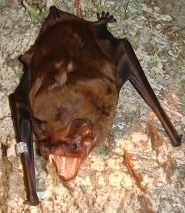 The
The 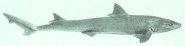 The
The 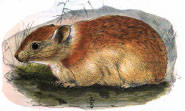 The
The 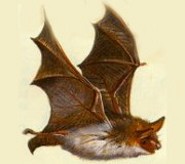 The
The